This past weekend at Eastbrook as part of our series, “The Tree and the Vine,” I reflected on what it means to experience God’s pruning in the spiritual life with a message entitled “The Pruned Life.” I concluded that message with three types of pruning within the spiritual life. I’m sharing the basic notes on that here because a number of people have spoken with me about it.
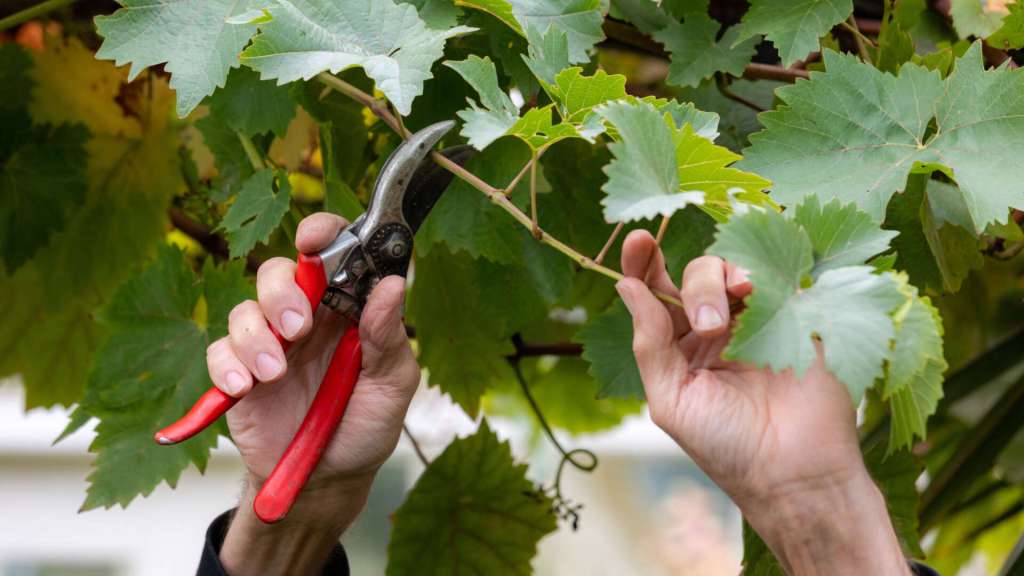
When we think pruning, there are different kinds of pruning. I’d like to explore three different types of pruning in our spiritual life.
Pruning related to sin
For our first example, a gardener may prune part of a bush to get a disease out of it. I think of a tree in our back yard that I had to cut a portion away from so that disease related to a wound would not spread to other parts of that tree.
So, too, in our spiritual life there are times when God’s pruning involves protection from disease. This is the pruning related to sin. Sin is that which is a deficiency in our lives from God’s ideal. We always will have sin in our lives, but the journey with Christ is that steady growth to become more like Jesus in thought, word, and deed. There is no shame in sin, for it is the common lot of humanity after the fall from grace. But there is guilt in sin, meaning that we need to take responsibility for our wrong and let God grow us through that.
Sometimes there are things God must prune away so that sin doesn’t spread in our lives, so that a small activity doesn’t become a bigger activity, leading to our ruin. This will touch on our thoughts, words, and deeds.
Remember, God the Gardener prunes us in relation to sin so that we might live and be fruitful instead of letting disease overtake our lives.
One way we allow this pruning to happen is to compare our lives with what we read in the Ten Commandments in Exodus 20 or Paul’s descriptions of the work of the flesh and the fruit of the Spirit in Galatians 5. As we read those passages, we can let God speak to us about where sin has taken hold in our lives. We can ask God to prune that disease of sin and replace it with His life.
The first pruning is related to sin.
Pruning related to service, or religious activity
For our second example, a gardener may prune to help a plant grow more fully when it has become overgrown. There was a bush in our front yard that had become big and unwieldy, so two years ago I cut it back very dramatically so that new growth could come. It looked measly for awhile, but it will return stronger than before.
So, too, in our spiritual lives there are times when God will prune away what has become overgrown so that maximum vitality and fruitfulness can occur.
Knowing that John 15 is written to disciples of Christ, it is worth considering that Jesus is not only trimming away bad things, like disease, but also some good things that are weighing us down. There are times in pruning where even good growth from a previous year is cut back so that new growth will come. So, too, in our spiritual lives we must let God prune away also the good growth of previous seasons so that new growth can come in the present year. We cannot simply live in the good of previous seasons, as valuable as that is. It does not mean that the old was meaningless or did not have value for today. We simply recognize it is always true that God is doing a new thing.
In the center of our backyard there used to be a wonderfully beautiful apple tree. In the spring it would send out beautiful flowers and in the summer into fall tremendous fruit that tasted good. People would sometimes come to our tree to gather fruit. It was wonderful.
But over time the tree not only dealt with some disease but actually became too big to support its own weight. One summer day, I awoke to find the tree split into pieces in our backyard. It had broken under the weight of the beautiful flowers and heavy fruits.
Sometimes our life with God can become like that. We are too filled up with so many good things that our life cannot support it. It’s not that we shouldn’t be in this Bible study or that service area, but we are stretching beyond our limits.
In times like that, God may graciously prune back the weight of too many good things so that we can be more focused on the most important things. As I have said before, God is not that interested in uncommanded work. And there are seasons where he pulls us back, redirects us, takes us into a pause, or leads us into new territories of service to Him. That is the good pruning of our service.
The second pruning is related to service.
Pruning related to circumstances
There are other times where a gardener has to prune because of what has happened to a tree or bush due to external circumstances. When we lived in Mukwonago, a series of tornadoes came through the town of Eagle, leaving devastation in its wake. Many homes were destroyed, and many trees were tossed down like toothpicks flicked into a garbage can. The circumstances required pruning.
So, too, in our spiritual lives there may be external circumstances that occur that may become an opportunity for God to do some pruning in our lives. We did not choose these circumstances and they are not necessarily unique to us, as others may go through them as well. But in the hands of God such circumstances can be used for pruning to bring greater vitality and fruitfulness in our life with God.
Let me mention two special circumstances that are worth highlighting in relation to pruning.
The first of those is suffering. Suffering is one of the special circumstances God can use to prune our lives. We may go through a job change or a change of financial capacity or health difficulties or the common suffering of other humans during a season of economic difficulty or political turmoil. It is not that we delight in suffering, but we allow God to use it in us.
Think with me on the one hand of a personal season of suffering, like great health challenges. We would not choose it, but we can give it into the hands of God for His use. We can let God work in us and shape us to be more like Jesus or not. We can let God work through us for the good of others or we can choose not to let God do that.
Think with me on the other hand of a communal season of suffering, like the pandemic. Again, we would not choose it, but we can give it in to the hands of God for His use in our fruitfulness and life. I do not say any of this to minimize suffering. It is painful and we all would not want to have it in our lives. Yet, we can let God work in us and shape us to be more like Jesus or not. We can let God work through us for the good of others or we can choose not to let God do that.
A second special case of pruning in circumstances is related to what is called the dark night of the soul or wilderness. St. John of the Cross describes a special circumstance he calls the dark night of the soul, where God will strip away all exterior consolations of His presence to draw us back to Him and Him alone. Some call this season a “wilderness,” like the wilderness wanderings of God’s people en route to the Promised Land. Here in this wilderness or dark night, we allow God to prune away anything other than Himself that we might more truly love the Lord our God with all our heart, and soul, and mind, and strength. And it is here that God is also trying to pull us more deeply int attentiveness to Him.
So, the third type of pruning is related to circumstances.
All pruning is done by God the Gardener through God’s powerful word. The Gardener is good, mighty and tender, powerful and loving.
The pruned life may be painful at times, but that pain is not purposeless but has purpose. The purpose is for the good of the branches to bring greater life of Christ in us that results in greater fruitfulness.
Discover more from Matthew Erickson
Subscribe to get the latest posts sent to your email.
 Matthew Erickson